Part 1 in our Propagating Cacti and Succulents Series
- Part 1 - Propagating Paddle Cacti (this article)
- Part 2 - Propagating Agave
- Part 3 - Propagating Columnar Cacti
- Part 4 - Propagating Ocotillo (Fouquieria splendens)
Part 1 in our Propagating Cacti and Succulents Series
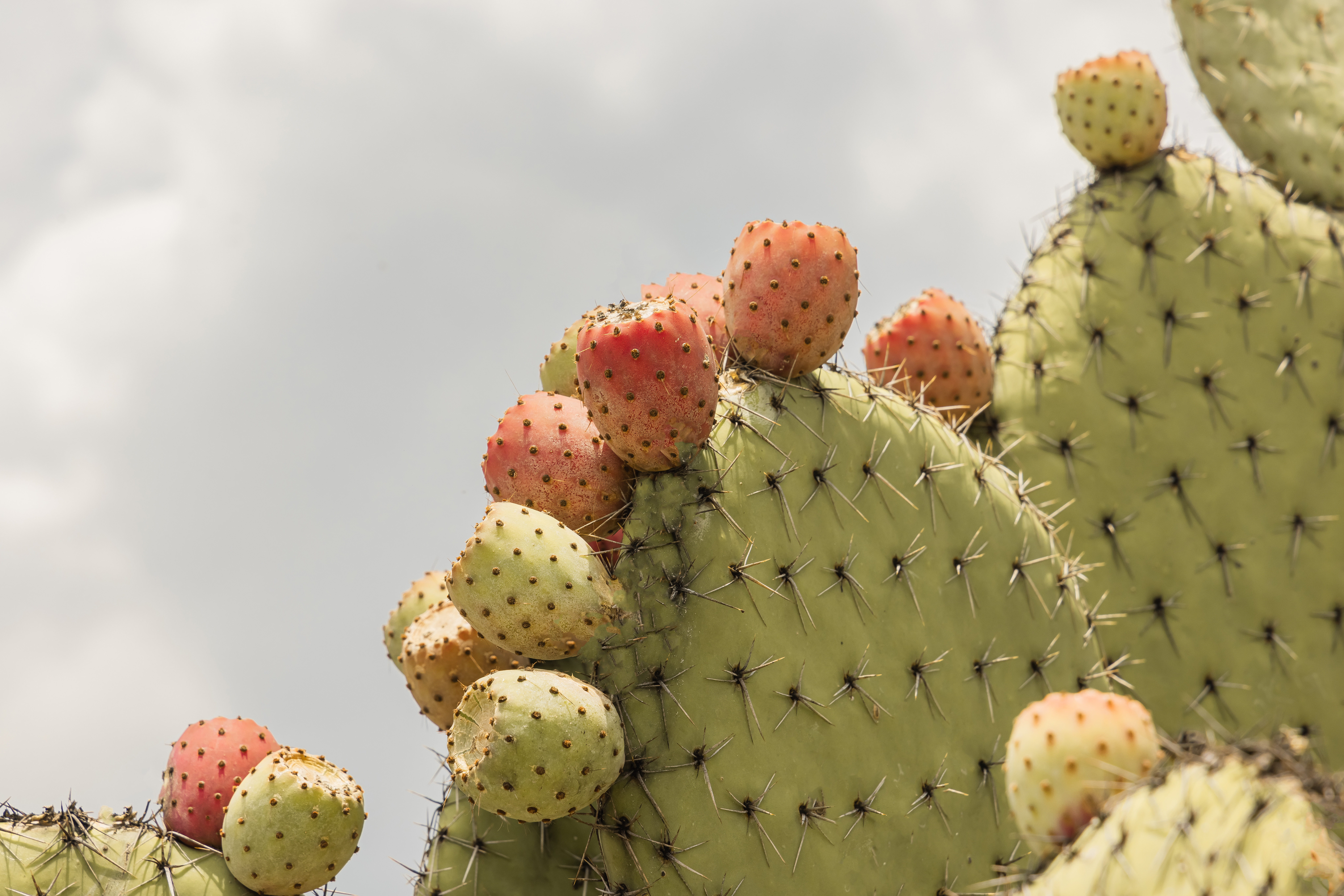
Paddle cacti (genus Opuntia) are recognizable for their round-to-oval shaped segments, which are called cladodes, or pads, hence the name. They are incredibly resilient, drought-tolerant, and an important host plant for dozens of species, and a reliable source of fruit and nectar. They are also very easy to propagate, so let’s get into it.
Paddle cacti grow in distinct segments that are designed to detach. Each pad is a self‑contained reservoir of water and stored energy, and the joint between pads is a natural break point. Detached pads seal their wounds quickly, resist rot when kept dry, and send out roots with very little encouragement.
Paddle cacti are best propagated in mid-spring when the chance of frost is well past, and the plants have taken in the winter rains, although any season but winter will work with some adaptations.
Cacti have both small and large spines. Wear thick, heavy gloves and cover exposed skin to keep you safe.
When you’re selecting a pad to propagate, start by looking at the whole plant’s health. A good parent plant will have plenty of mature, thick pads with strong color and clean surfaces. Pads with wrinkles, soft spots, scabs, or signs of past wounds are less suitable.
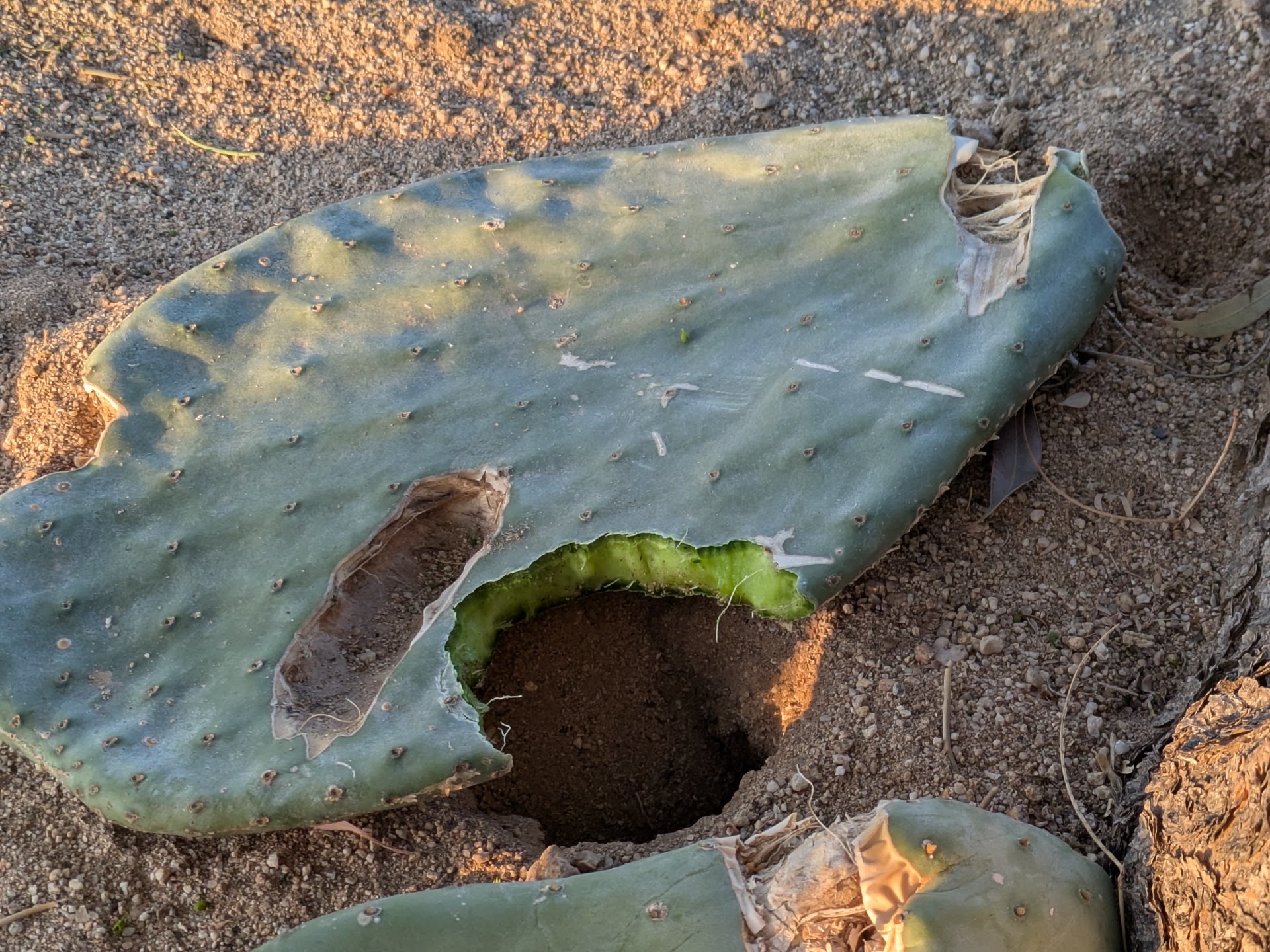
Age matters too. A pad that’s at least a year old has already adapted to the local climate and built up enough stored energy to support new root growth. Very young pads are still thin and tender, while very old pads can be woody or oversized.
Size is the most reliable factor in choosing a pad. Larger pads can root, but they take longer to settle and are more likely to topple or stay unstable in the soil. In practice, pads between three and eight inches tend to root the most reliably as they are well-sized and not too old.
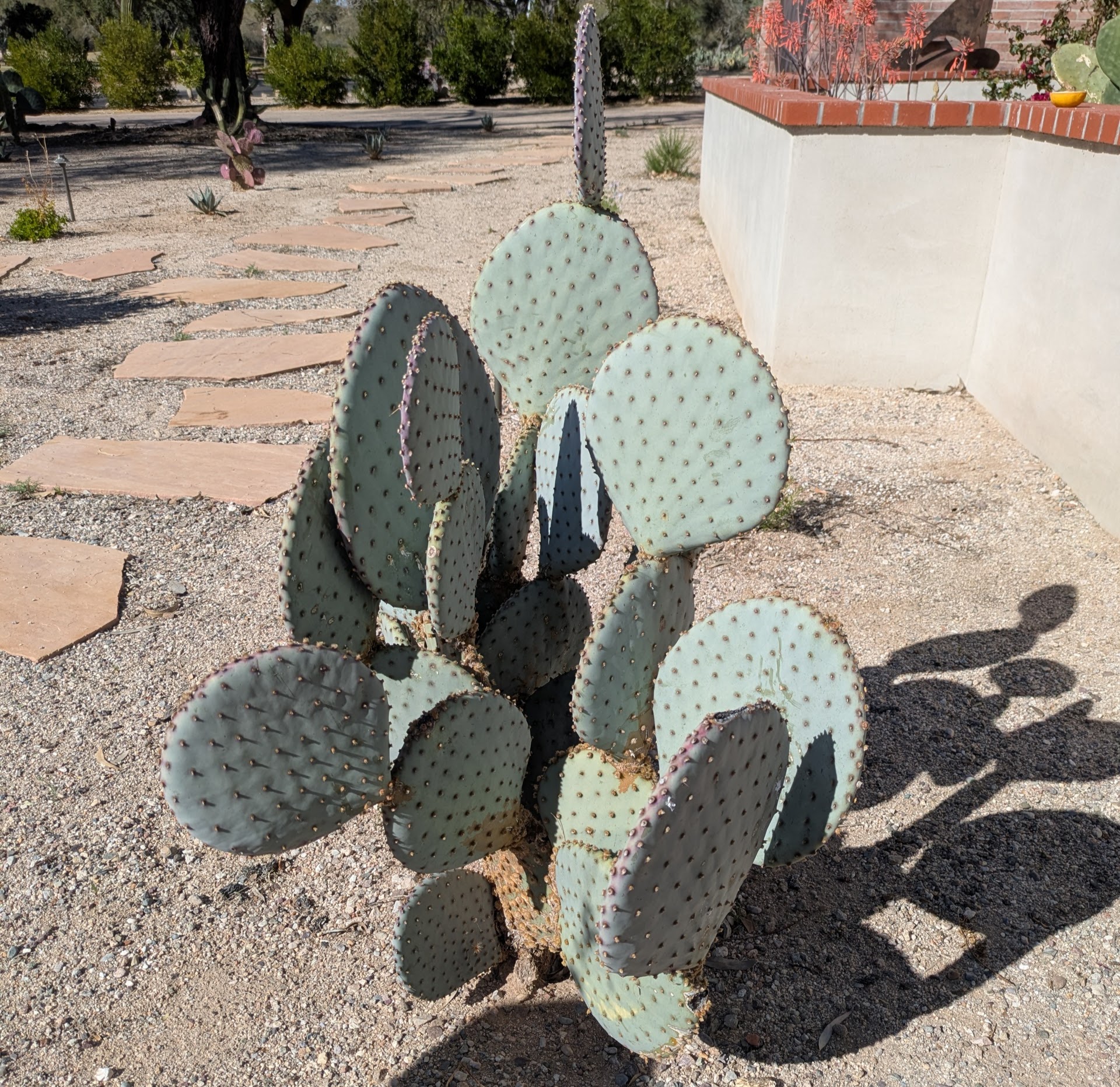
If you want a head start on a fuller plant, you can also take two connected pads. They root in much the same way, and the extra stored energy often results in faster top growth once established.
Pads should be carefully removed at the woody join. I have found it easiest to use a clean, sharp garden knife or shears to make a clean cut.
Because paddle cacti have both large spines and much smaller, often near-invisible glochids, take extra care when handling pads. Smooth-ended barbecue tongs are my tool of choice, although many gardeners will also use newspaper or old carpet to carry them.
Thoroughly sterilize and dry your cutting tools before removing cactus pads. 70% Isopropyl Alcohol works very well.
Once removed, every pad needs time to callus. This drying period reduces the risk of rot by sealing the wound into a firm, white, corky surface. Depending on humidity and pad thickness, this can take anywhere from three days to two weeks. A fully callused end looks matte and chalky, with no lingering moisture.
When the pad is ready, plant it in a fast‑draining mix. A gritty soil keeps excess moisture away from the wound and encourages roots to reach downward. A 50/50 blend of sandy native soil and commercial cactus mix works well in my experience because it both feeds the plant and acclimates it to the conditions it will eventually grow in. The pad should sit upright or slightly angled. You may need stakes to support taller pads.
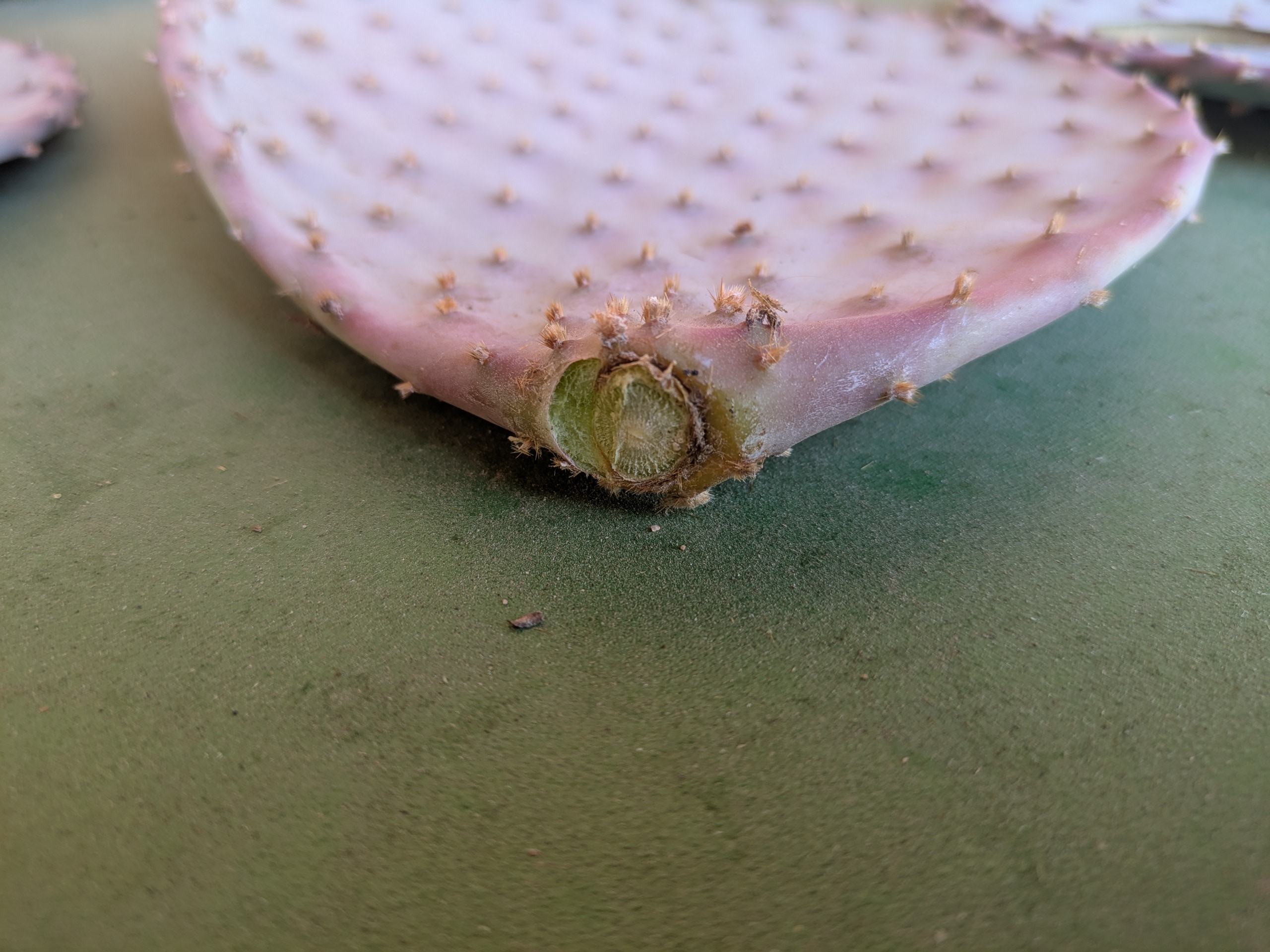
Once a pad is planted, the most important thing you can do is not water it. A freshly callused pad contains enough stored moisture to sustain itself for weeks. If the mix stays damp, the pad is less likely to root and is far more likely to rot from the base upward.
For the first two to three weeks, simply leave the pad in bright, indirect light and let the soil remain completely dry. Warmth speeds things along, so a spot that stays above 70°F during the day is ideal.
After a few weeks, you can test for early rooting by gently pulling on the pad. A pad that has begun to root will feel slightly anchored, as if it’s gripping the soil. If it lifts easily, set it back and give it more time. Once you feel that first bit of resistance, you can begin watering lightly—just enough to moisten the top inch of soil. Then let it dry out completely again before the next watering.
Rooting speed varies by species, temperature, and pad size. Smaller pads often root within two to four weeks, while larger ones may take six or more. The first visible sign of success is usually swelling and deepening color at the top of the pad, followed by the emergence of a new segment. When that new growth appears, you can be confident the plant has established a functioning root system.
When the pad has rooted, acclimate the cactus to the conditions of its final planting location over the course of a week or so, and then plant as you would any other plant.
A moderate soak once a month for the first 3-6 months will help the cactus naturalize itself to the rainfall in your area, and from then on it should be plain sailing!
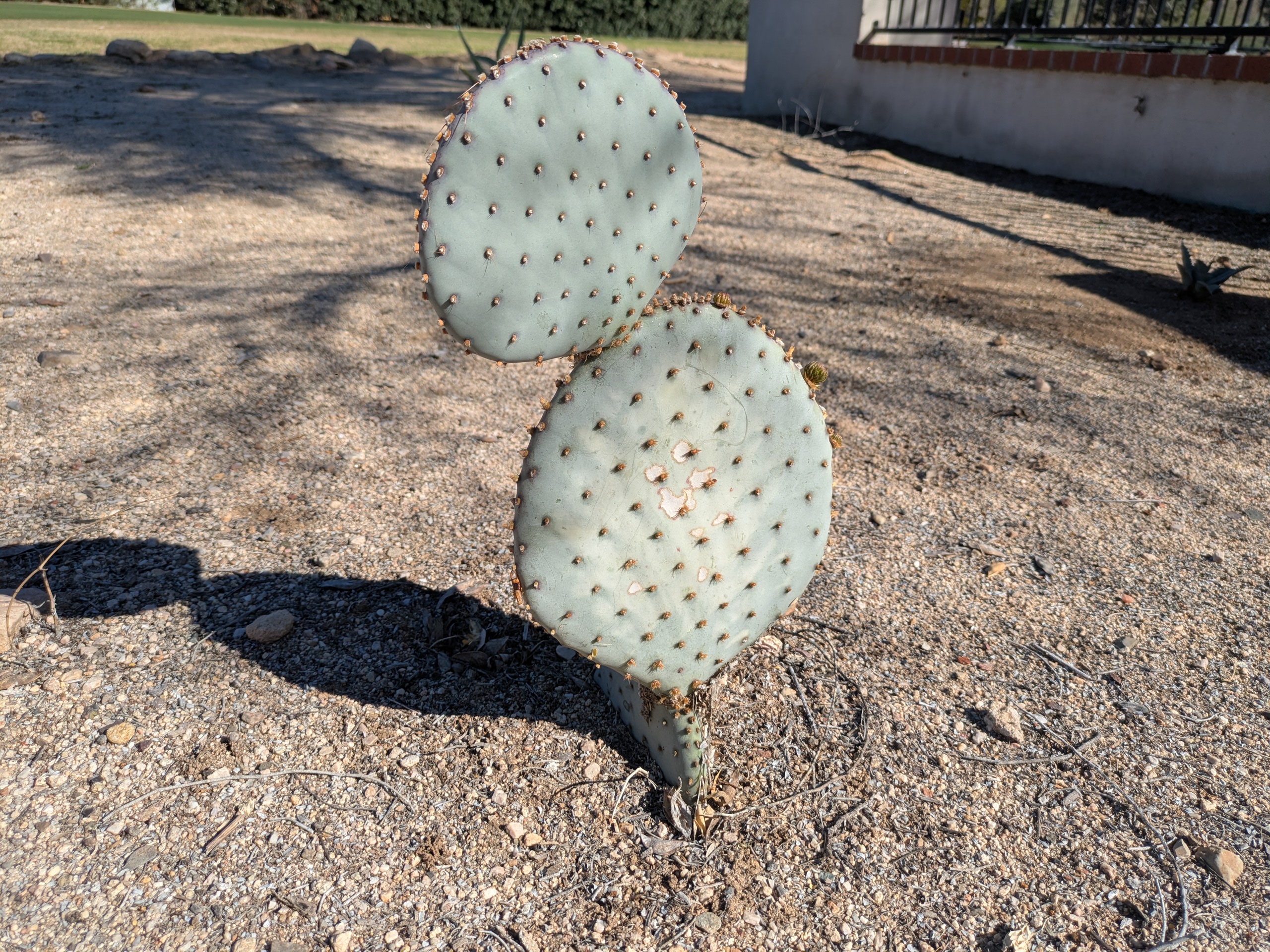
Even with good pads and proper soil, a few issues can show up during propagation. These quick cues help you spot trouble early.
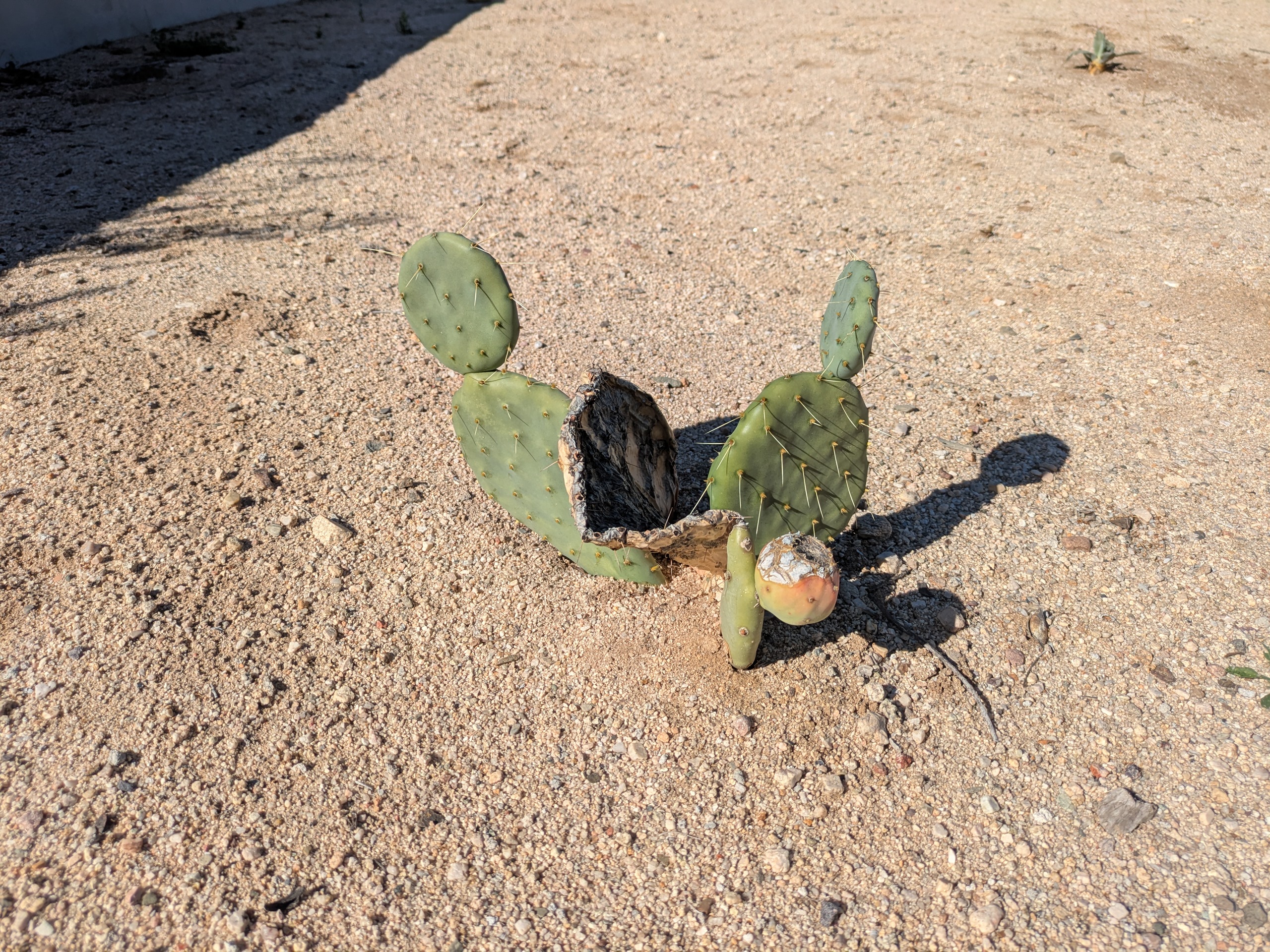
Working with paddle cacti is incredibly rewarding. After just a couple of years of propagating you can have many more thriving plants, each producing fruit and flowers for you and wildlife to enjoy.
Check out the other articles in this series to learn how to propagate other cactus types.