Part 2 in our Hanging Baskets Series
- Part 1 - Hanging Baskets: Floating Greenspace
- Part 2 - Hanging Baskets: Designs and Common Problems (this article)
Part 2 in our Hanging Baskets Series
In part 1, we went over the starting principles for hanging baskets. In part 2 (here), we’ll go through some design ideas which you can adapt with plants suited to your area, and discuss some common issues hanging baskets face.
Here are some design inspirations to help you create your own hanging baskets.
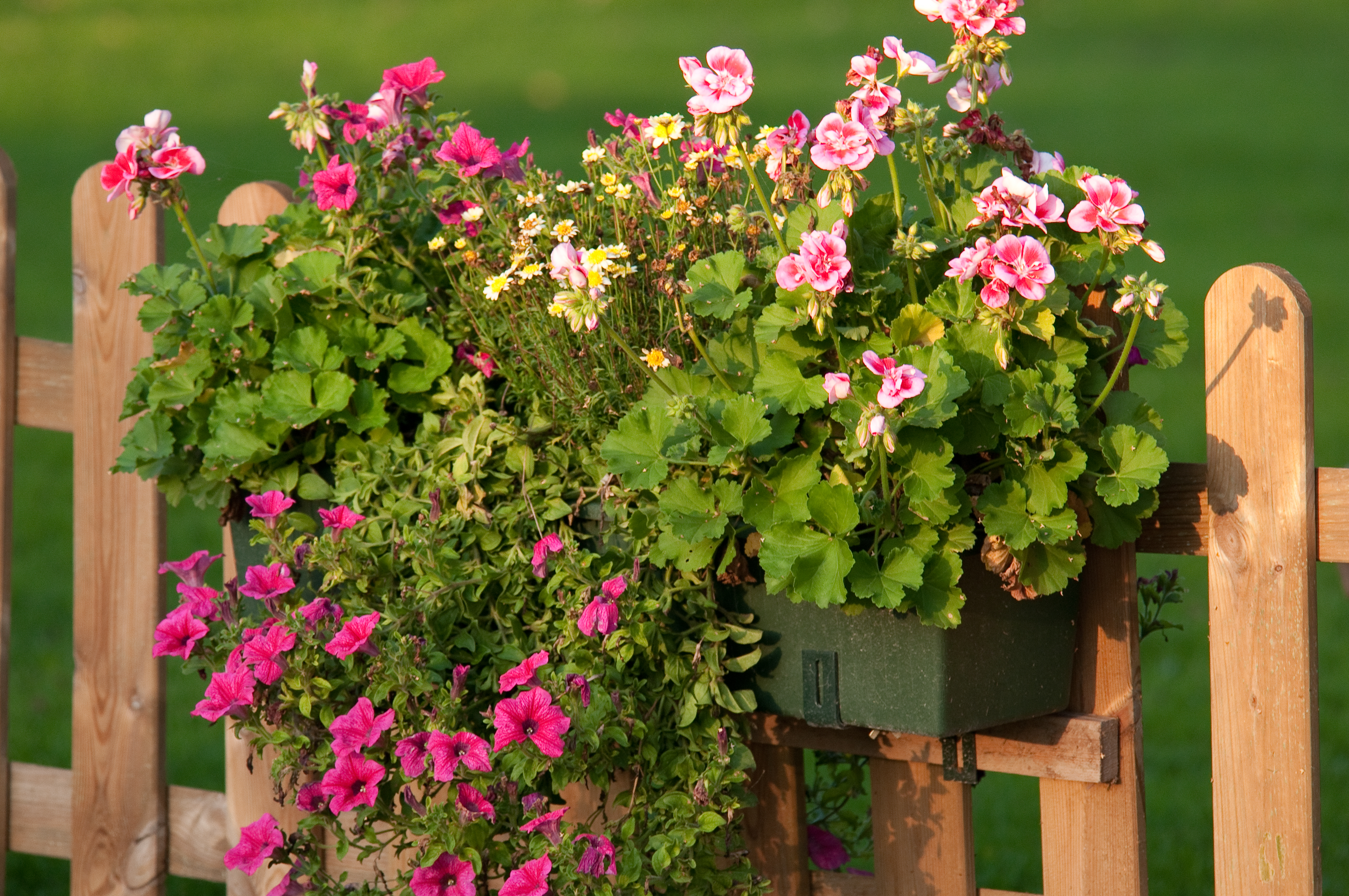
You can frame the edge of your hanging basket with trailing plants like lobelia and ivy geranium. Petunias, geraniums, snapdragons, begonias, and fine-textured sedge grasses can all fill out the center for a showy, spilly design that drapes generously over the sides of the basket. This style works especially well when you lean into colour harmony. Try an analogous palette of pinks, purples, and reds for a soft, cohesive look, or go bold with a split‑complementary scheme — red paired with yellow and blue — for a vibrant, high‑contrast display that still feels balanced.
This design works well as a perennial basket, with annuals traded out through the seasons, giving you a good framed canvas to work with. Most small flowers can work with a basket of this type, which favors dense, showy plantings.
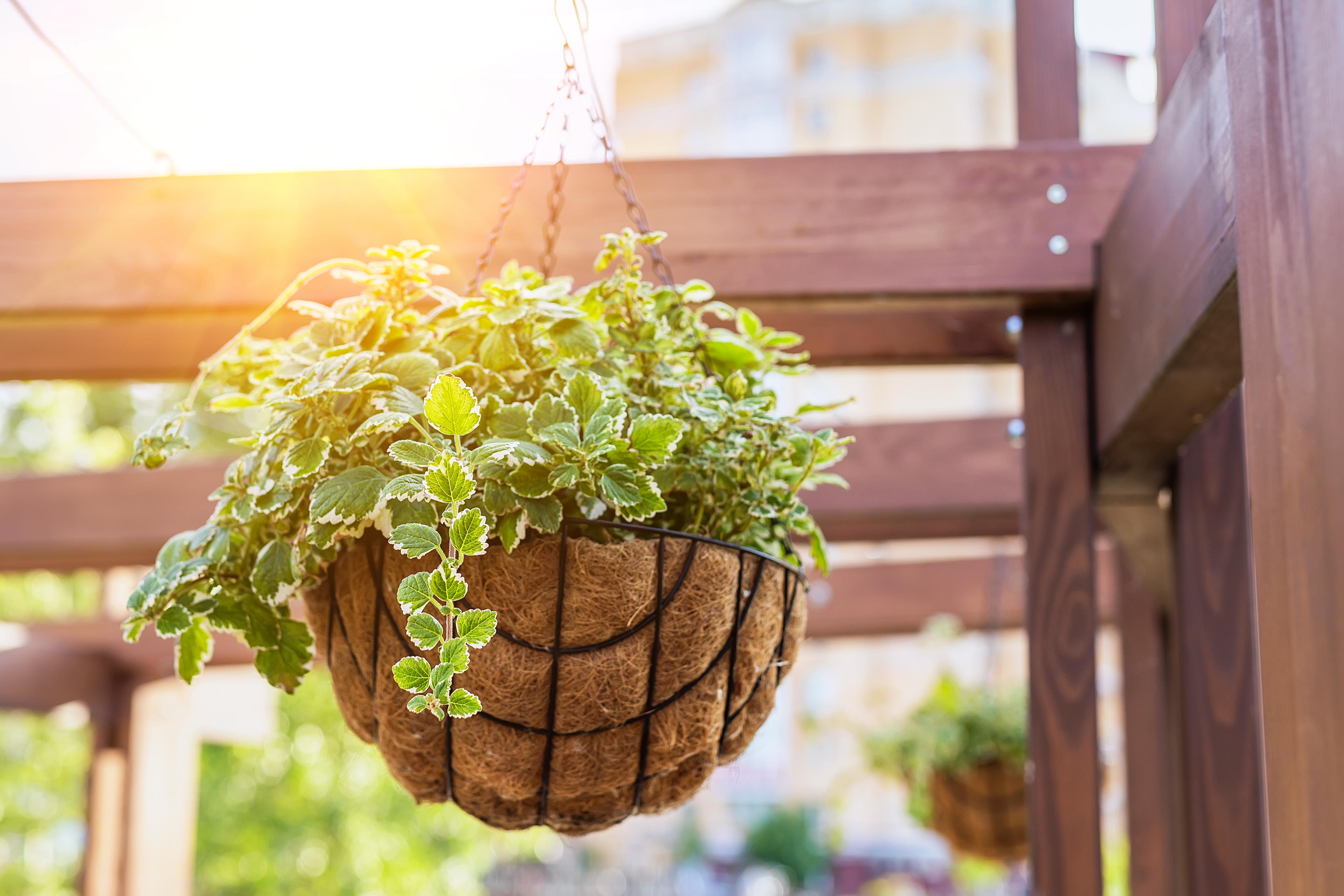
Create a compact, aromatic basket by framing the edges with trailing rosemary and a mix of colourful nasturtiums. A small sage plant is a wonderful off-center centerpiece, and looks great when surrounded by calendula (not so suitable for smaller baskets), oregano, lemongrass, and dwarf mint.
This basket will require regular trimming so it does not become overgrown, but it is wonderfully fragrant and well worth the maintenance.
Choose a small fern, and frame it with fuschias, heuchera, and/or hostas, and an ivy of your choice for a subdued, but no less pretty color palette. This works well in damp, shady environments, or if you want a particularly low-maintenance garden basket for the winter and springtime. In some climates, this will weather the summer, although you can supplement the fading plants with begonias for some easy color.
Ensure you have well-draining, slightly rockier soil for this one. Mix sedums, trailing jade, rock, and ice plants, and larger succulents like portulaca for a soft green and blue color palette. Consider adding a small feature ‘rock’ to add some bold color, like red sandstone. This pot will want fewer, but deeper waterings and is very much a plant-and-forget basket.
For a delightful mini-garden, consider a mix of fruits and herbs. Day-neutral strawberries stay small but will fruit very consistently. Common herbs such as oregano, sage, lemongrass, and chives will complement this planting, and the chives can be left to flower for some extra color.
Dwarf varieties of many plants, including tomatoes, peppers, cucumbers, and tomatillos, will also grow well in hanging baskets, with spinach and salad leaves also working well. Nasturtiums are an excellent flower choice, and they, too, are edible.
Plant this basket after your last frost date, or start in a protected place such as a greenhouse to get a headstart.
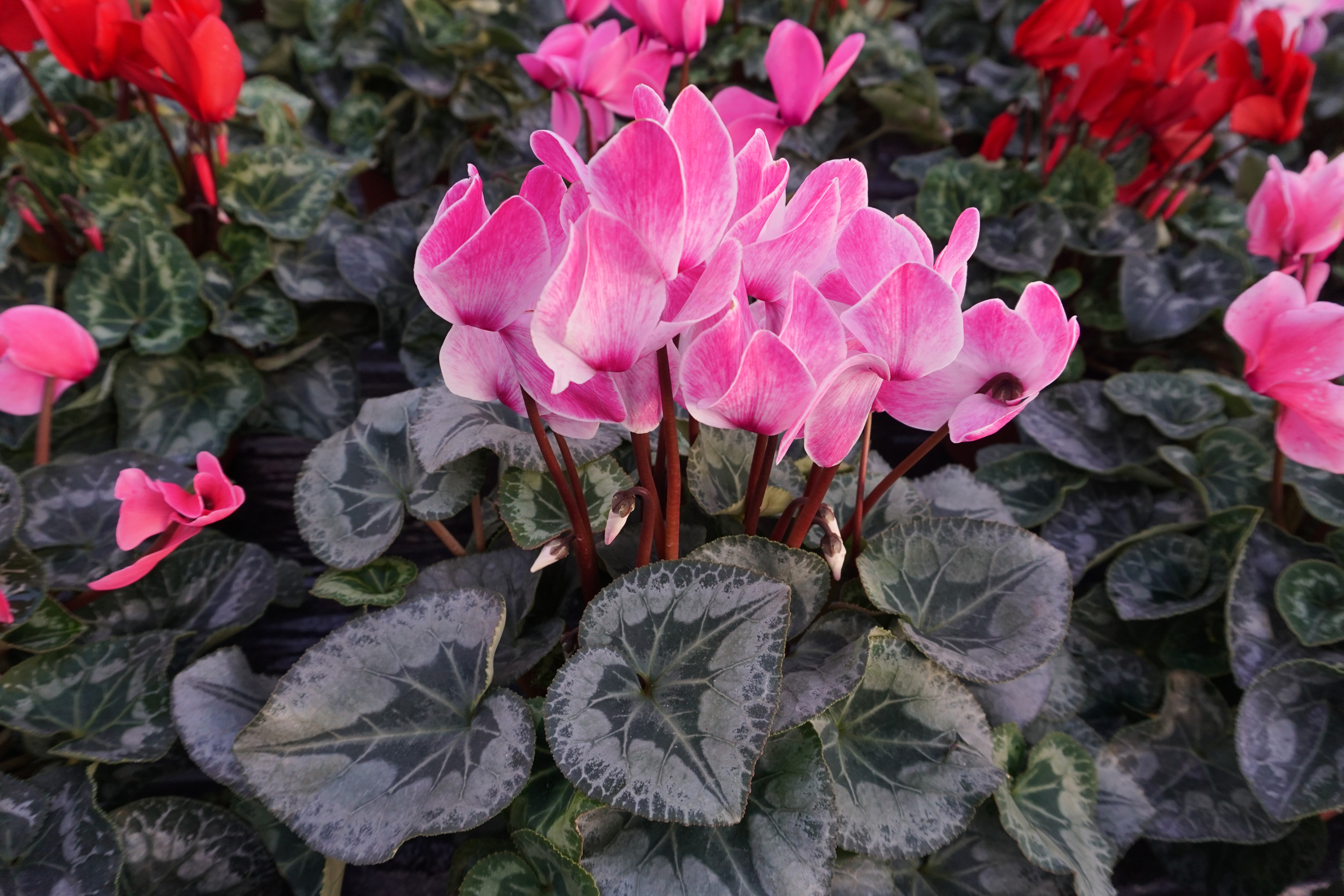
For cold-season color, consider plants like crocus, cyclamen, and primula for plants to grow on the out edges of your basket. They work well as a trio, interspersed together, or look beautiful as a color block. Winter-flowering heathers (such as Erica carnea) and Gaultheria are excellent centerpieces, with beautiful flowers or berries.
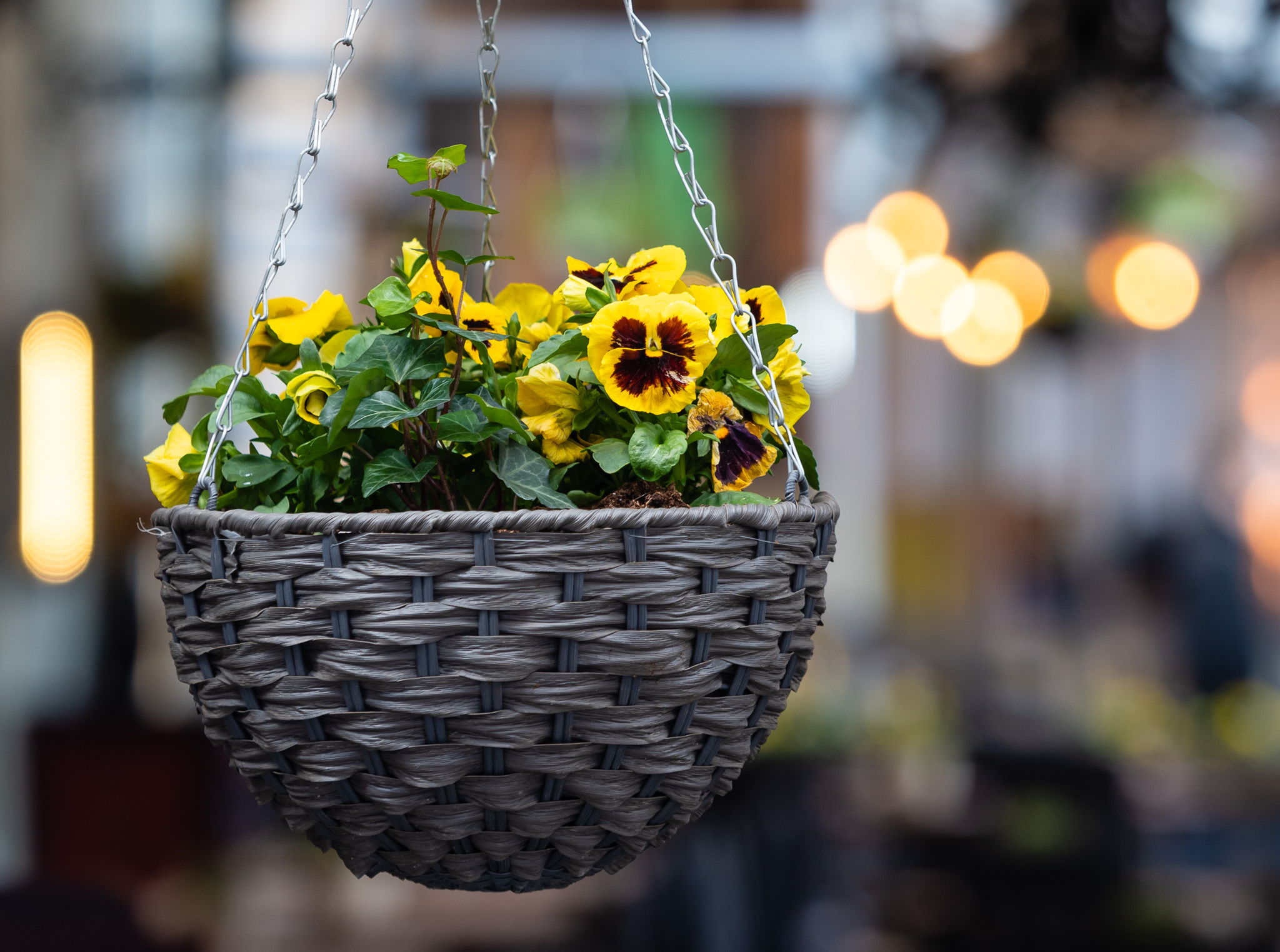
Consider adding a variegated ivy plant for some trailing interest, and some violas (winter pansies) for extra color. Winter baskets are generally best planted just before your first frost date, so the plants can acclimate before the cold weather sets in.
Most problems related to hanging baskets come down to water management. Because baskets are more exposed and have shallower soil than ground-level plantings, they dry out quickly. At the same time, frequent heavy watering can flush nutrients from the soil just as fast.
To reduce the risk of underwatering, check soil moisture regularly—this may mean once or even twice a day during hot weather. Water slowly and in stages, allowing the basket to absorb moisture gradually rather than letting it run straight through.
To avoid overwatering, continue watering only until a small, steady drip appears from the bottom of the basket, then stop. Constant saturation can deprive roots of oxygen and lead to stress or rot, especially if drainage is restricted.
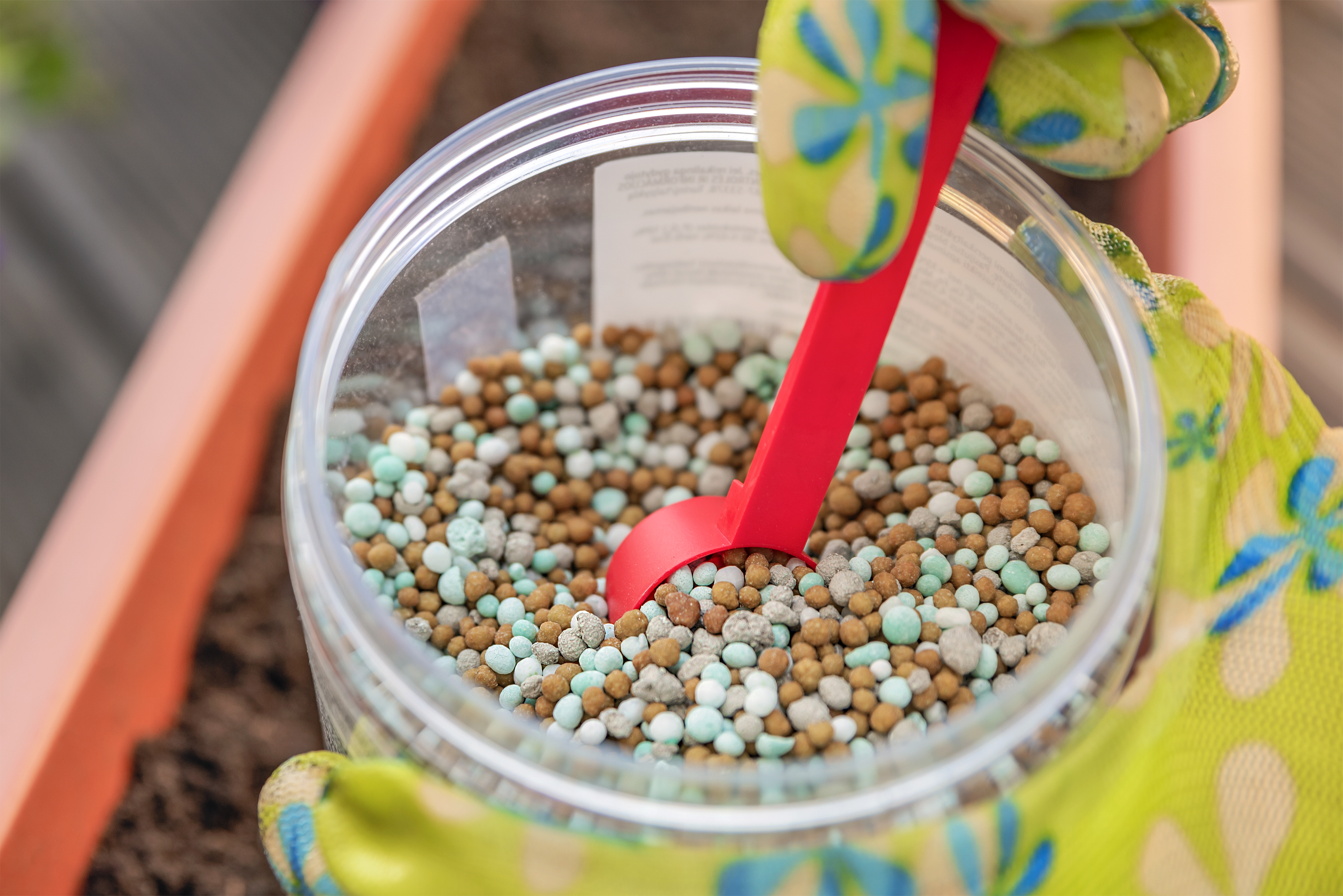
Because nutrients leach quickly from hanging baskets, soil fertility is the second major concern. Regular feeding with a diluted liquid fertilizer, or an appropriate granular fertilizer, is essential during active growth periods. Always water before and after feeding so nutrients are absorbed safely and roots are not damaged.
Different plants have different fertilizer needs, and there are lots of different types. Check out the articles below to get more familiar with fertilizers.
Fertilizer: Beyond the Bag. By Erin
Understanding Fertilizer Labels. By Lexi
If your basket looks wilted even though the soil is damp, poor drainage or root congestion is often the culprit. Compacted soil or an overly thick liner can prevent oxygen from reaching the roots, causing stress even in wet conditions.
Gently loosen the soil surface if possible, ensure drainage holes are clear, and consider thinning or replanting overcrowded baskets. In persistent cases, replanting with a lighter mix is often the best solution.
Hanging baskets are rarely exposed evenly to light, wind, and rain. Plants on the sunniest or windiest side often grow faster, leaving sparse areas elsewhere.
Rotate your basket every week or two to encourage balanced growth. Regular pinching and light pruning also help maintain an even, full shape.
While hanging baskets are less prone to pests than ground plantings, aphids, spider mites, and whiteflies can still appear—especially in warm, dry conditions.
Inspect plants regularly, particularly the undersides of leaves. Early intervention with hand removal, a strong spray of water, or an organic soap solution usually prevents infestations from becoming serious.
If you find yourself watering constantly, the issue may be basket size, soil mix, or liner thickness. Very small baskets and ultra-free-draining mixes require near-constant attention in hot weather.
Upsizing the basket, adding more moisture-retentive material to the mix, or using a thicker liner can dramatically reduce watering frequency.
It’s important to check on the overall health of your plants and baskets. Perennial plants may become rootbound over time, and should be graduated to your garden if appropriate, or thinned out if possible.
Additionally, the basket and liner will need upkeep over time. Wood baskets can be refreshed with a suitable natural wood oil, and liners can be replaced as they decay. Hanging baskets are not permanent plantings, and part of their care is knowing when to refresh or retire them.
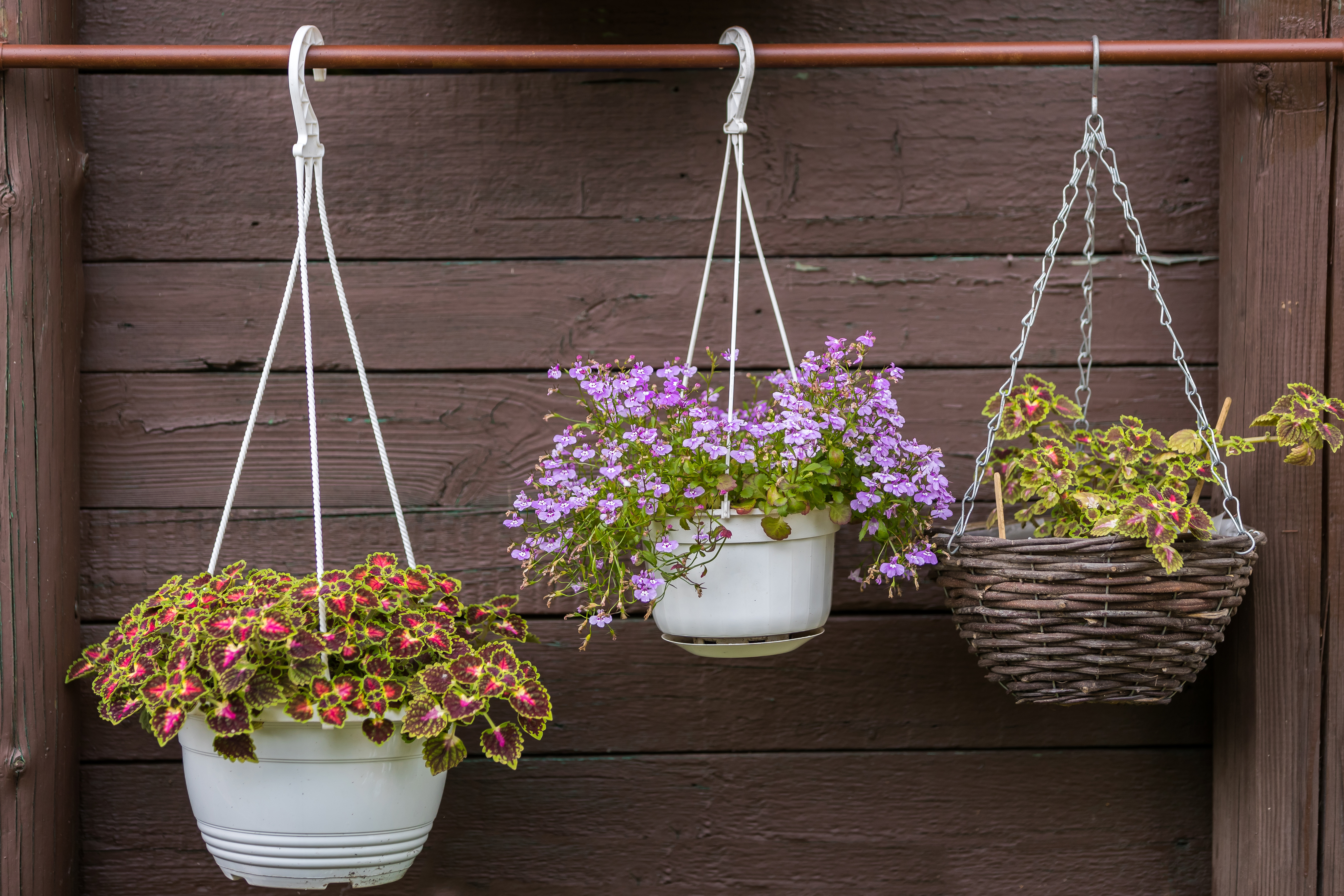
Hanging baskets are a fun, wonderful way to add vibrancy to your garden. As with most gardening, it will take some experimenting to find the best mix of plants and locations for where you live. With a little attention and curiosity, hanging baskets become less a decoration and more a living, seasonal pocket within your garden space.